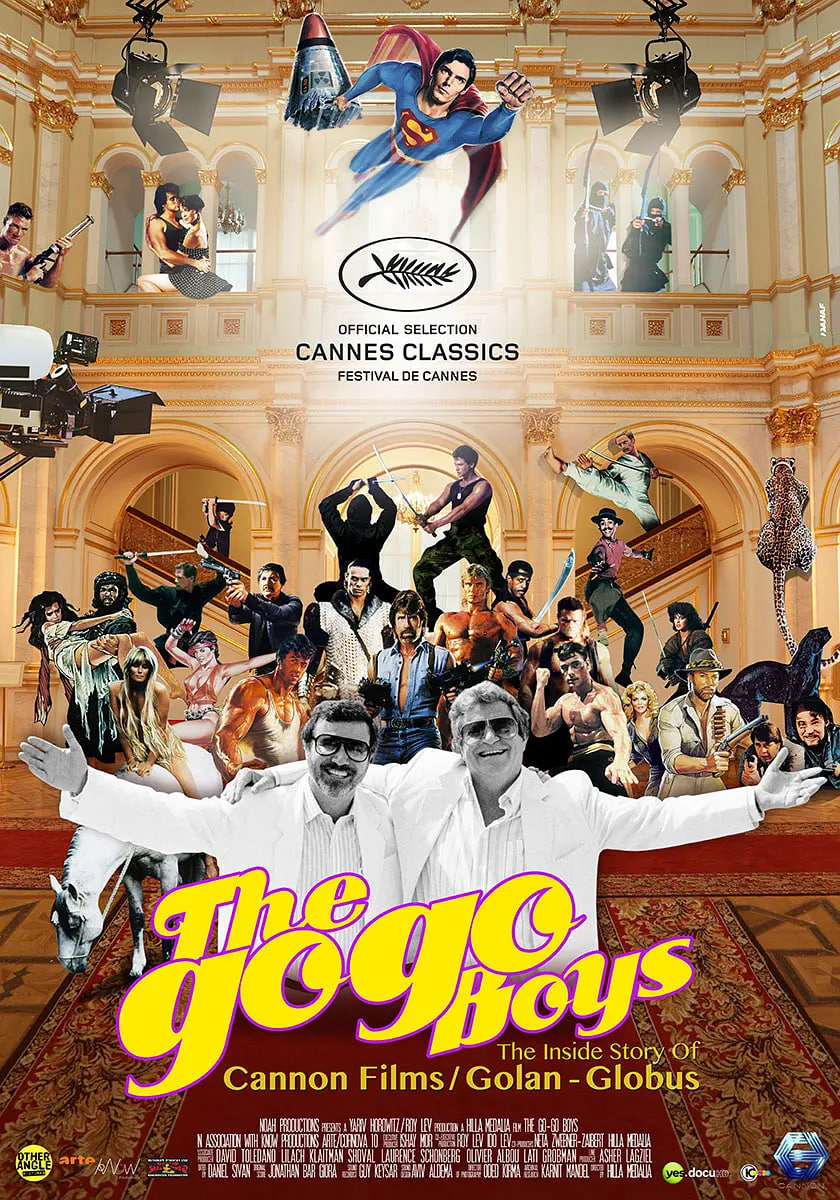
淘金男孩:加农电影公司的内幕
乔恩·沃伊特
,
安德烈·康查洛夫斯基
,
查克·诺里斯
,
查尔斯·布朗森
,
比利·德拉戈
,
米纳罕·戈兰
,
西尔维斯特·史泰龙
,
迈克尔·杜迪考夫
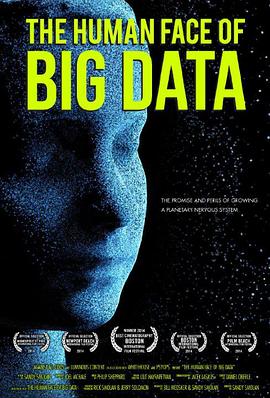
人类面对大数据
With the rapid emergence of digital devices, an unstoppable, invisible force is changing human lives in ways from the microscopic to the gargantuan: Big Data, a word that was barely used a few years ago but now governs the day for many of us from the moment we awaken to the extinguishing of the final late-evening light bulb. This massive gathering and analyzing of data in real time is allowing us to not only address some of humanity biggest challenges but is also helping create a new kind of planetary nervous system. Yet as Edward Snowden and the release of the Prism documents have shown, the accessibility of all these data comes at a steep price. The Human Face of Big Data captures the promise and peril of this extraordinary knowledge revolution.

我们的那时·此刻
二○一三年,金马奖热闹感动地庆祝走过半世纪。杨力州导演拍摄‘金马50’纪录片。从经典到潮流、强人到百姓,每个人的金马故事,汇流成这条浩瀚蜿蜒的电影长河。
精彩的不只是影坛耆老坦承当年恩怨,或是电影运动背后的筚路蓝缕,更特别的是庶民。
观点的加入:面临台湾经济转型, 离乡背井打工的少女如何藉由文艺爱情片寄托青春梦想;国难当头时,热血男儿受爱国电影激励立志从军。他们仍会为了电影哭、电影笑的反应,对比时下宅男与心仪女星的纯情初相逢,突然没有了代沟。这是一封写给电影的情书,拍电影和看电影的,在这里穿越银幕与时间的限制,同在一起。

亚洲之爱
集合了亚洲各地10位当红名模,由MaggieQ监制,包括台湾甜姐儿林志玲都入镜的“LoveAsia”DVD,于24日起全亚洲同步发行,“LoveAsia”由新加坡时尚摄影师LeslieKee掌镜,在度假胜地马来西亚兰卡威、吉隆坡等地拍摄,充满夏日风情。林志玲在当中展现琴艺、小秀舞蹈,以及与众名模们至PUB狂欢的幕后镜头。
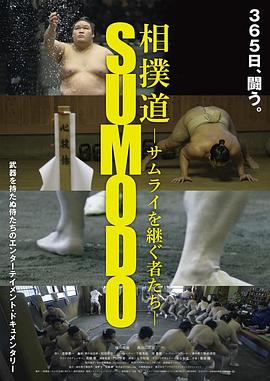
相扑道
Although sumo is a cherished part of Japanese culture, few have managed to get a behind-the-scenes look at the sport. Director Eiji SAKATA had the opportunity to spend six months in close contact with two sumo stables. In the process, he managed to capture fascinating footage of the rigorous training sessions and daily life of the wrestlers.

流行病:隐形的威胁
Quand une nouvelle épidémie d'ampleur planétaire va-t-elle frapper ? À l'heure où de nouveaux virus émergent à une vitesse sans précédent et où Ebola tue en Afrique de l'Ouest, une enquête rigoureuse sur cette menace invisible.
En soixante ans, plus de trois cent cinquante nouvelles maladies infectieuses sont apparues : SRAS, H1N1, H5N1, Ebola… Une émergence de virus qui semble s'accélérer. Unanimes, les experts s'interrogent : quand une nouvelle épidémie mondiale va-t-elle frapper ? Peste, grippe espagnole, variole, sida... : l'histoire est traversée d'épisodes infectieux qui ont décimé des populations. Mais où en est la recherche aujourd'hui ? Sommes-nous mieux préparés ? Le film part sur les traces de trois virus particulièrement menaçants : le H7N9 de la grippe en Asie, le Mers-CoV, cousin du SRAS, actif au Moyen-Orient, qui suscite les pires terreurs en Afrique de l'Ouest.

狗日子2014
张玉锋:《狗日子》纪录片主人公,1932年出生于河北沧州。20岁结婚,因老婆闹分家,半年后离婚,打了一辈子光棍。2003年开始捡废品,收养十几条流浪的猫狗,同时供侄子上大学。年过八旬的他,自食其力,饿了就去卖废品,换来钱买吃的,虽然生活不容易,但他活的很潇洒自由,活的铿锵有力,活出了自己的尊严。每个人的生活都能活出自己的艺术,但他却能传递给我很多正能量。

民主:沉醉在数据中
由“棱镜门”事件,斯诺登让全世界认识到:数据就是21世纪的石油,掌控数据就能拥有财富和权利。在大数据时代,我们在互联网上的每一次点击,支付和下载都在透露我们的信息。但由谁来掌控这些数据?这些数据又对我们的社会意味着什么?《民主:沉醉在数据中》将镜头对准了欧盟的立法进程,深入欧盟内部,记录了欧盟委员会委员维维亚娜·雷丁和年轻的绿党议员让·菲利普·阿尔布莱希特在两年半的时间中,为制定欧盟首部数据法案做出的努力。本片以数据法案为切入点,真实而又感性地展现了欧盟复杂的权力架构和民主议程。(豆瓣电影字幕翻译2.0小组)

南极3D:在边缘
Antarctica lives in our dreams as the most remote, the most forbidding continent on Planet Earth. It is a huge land covered with ice as thick as three miles, seemingly invulnerable, cold and dark for eight months of the year. Yet Antarctica is also a fragile place, home to an incredible variety of life along its edges, arguably the most stunning, breathtaking and still-pristine place on earth. The one constant is that it is constantly changing, every season, every day, every hour. I've been fortunate to travel to Antarctica many times; most recently with 3D cameras, a first for the continent. The result is our new film, Antarctica: On the Edge.

他们在岛屿写作:东西
我想要描述那未被描述的感情、未經細嘗的滋味、未受到注意的想法。我想環繞著那生命的謎團,逼近它發聲,展開對話。 2014年香港、2015年臺灣,文化界舉辦了「回看 也斯」活動,懷念逝世的作家也斯,以及他所聚集的美好年代。 也斯的創作涉獵不同的文化,跨越不同的媒體,好友則遍及東西各地。他寫作的詩、散文、小說和評論,如繁花盛開的狂夏,千姿百態。 本片啓動於2009年,當時也斯建議導演團隊:「若你想認識我,就去認識我的朋友,在我朋友身上都可以看到我的影子」。訪問不同領域的人士,包括學者、文學家、藝術家、服裝設計師和美食家,以及也斯家人等,在極具風格的訪談中,展開也斯從1950年代到21世紀的旅程。

挖眼睛
二后生五十出头,是个唱二人台的江湖艺人。游走在内蒙古河套地区。
二十四年前,他在一个村子卖唱时认识了三女子。三女子有男人,家境苦寒,男人让她跟上二后生卖唱养家。不料日久生情,二后生要带三女子远走高飞。男人知道后叫上自家的两个兄弟,把二后生诓到村里,挖掉了他的双眼。二后生死里逃生,保全性命。后来便把这段经历编成了二人台曲子,曲名叫《挖眼睛》。红及内蒙晋北一代。
纪录片《挖眼睛》记录了二后生的日常生活,追述了那些不堪的往事。呈现了他以死延生的人生境遇。
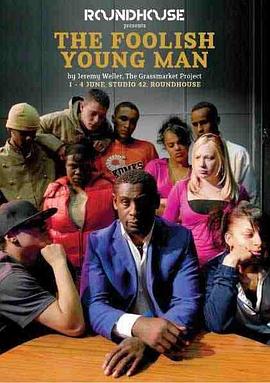
夏洛克的灵魂
Alan Yentob travels to the ghetto in Venice with award-winning novelist Howard Jacobson as he embarks on a retelling of Shakespeare's most performed play, The Merchant of Venice. Through a series of lively - often fiery - interviews, they examine the charge of anti-Semitism against Shakespeare, whose character Shylock remains one of the most odious and divisive fictional Jews in history.
How did the moneylender from Venice become such a useful propaganda tool in Nazi Germany? And how much of a liberty will Jacobson be taking when he uproots the action to modern-day Alderley Edge, and audaciously reinterprets the infamous 'pound of flesh'?
Interviewees include Antony Sher, Anthony Julius and Stephen Greenblatt.

登陆日,诺曼底1944
D-Day, Normandie 1944 a été spécialement réalisé pour les commémorations rendant hommage à l'opération "Overlord" autrement connue sous le nom de "D-Day" ou "Jour-J". Le fim est diffusé mondialement à l'occasion du 70e anniversaire du Débarquement Allié qui eut lieu sur les plages de Normandie le 6 juin 1944.
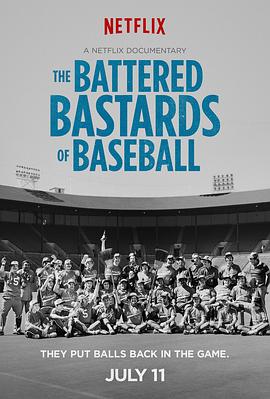
被殴打的棒球杂种
Chapman and Maclain Way’s energetic telling of one of baseball’s great, unheralded stories is as much about independent spirit as it is about the game. When Portland, Oregon, lost its longtime minor-league affiliate, Bing Russell—who briefly played ball professionally before enjoying a successful Hollywood acting career—bought the territory and formed a single-A team to operate outside the confines of major-league baseball. When they took the field in 1973, the Mavericks—the only independent team in America—started with two strikes against them. What did Deputy Clem from Bonanza know about baseball? Or Portland, for that matter? The only thing uniting his players, recruited at open tryouts, was that no other team wanted them. Skeptics agreed that it could never work.
But Bing understood a ballplayer’s dreams, and he understood an audience. His quirky, unkempt castoffs won games, and they won fans, shattering minor-league attendance records. Their spirit was contagious, and during their short reign, the Mavericks—a restaurant owner turned manager, left-handed catcher, and blackballed pitcher among them—brought independence back to baseball and embodied what it was all about: the love of the game.
- J.N.